
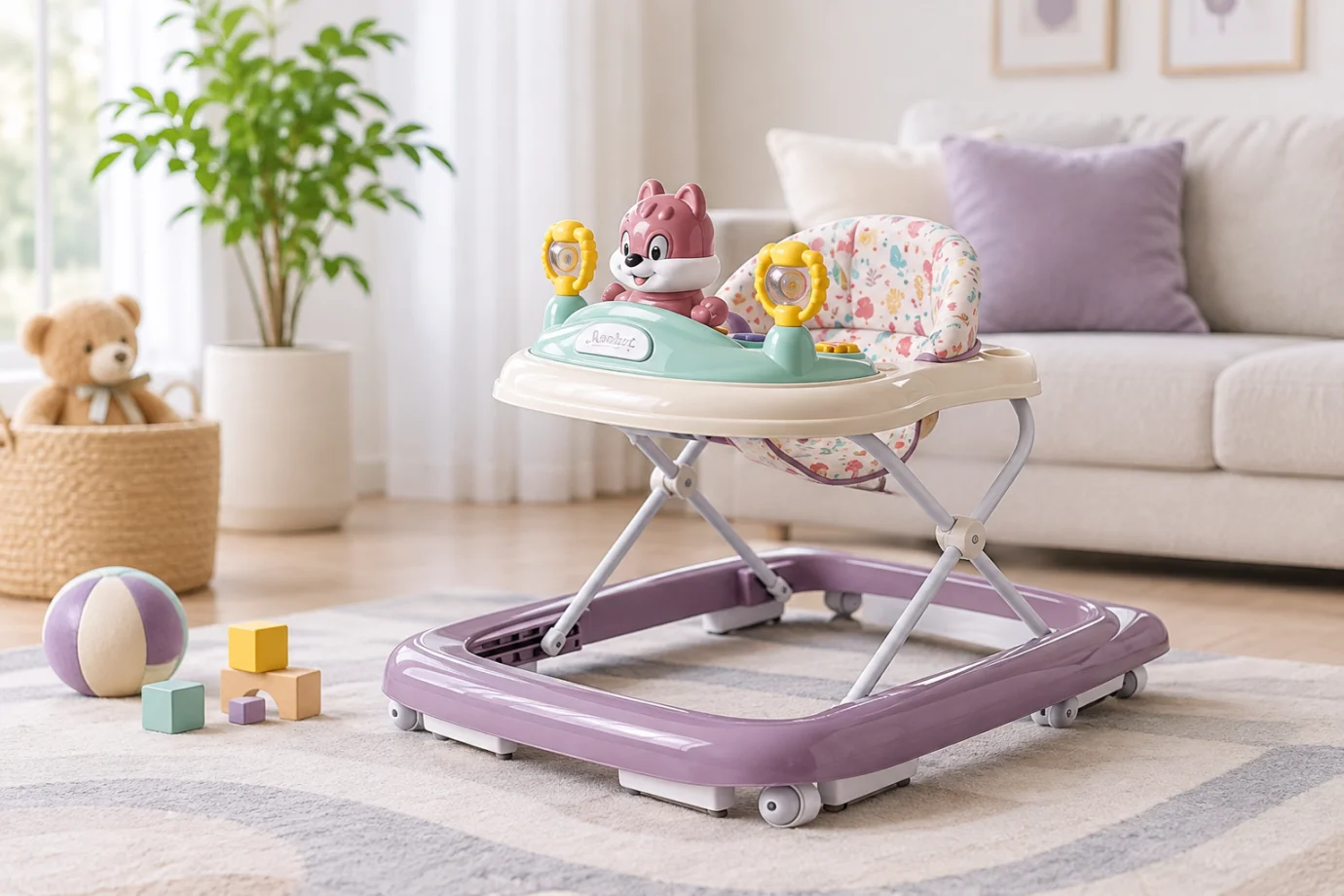
Does a Baby Walker Help a Child Learn to Walk? What Is the Best Way to Support Their First Steps?
When a child begins trying to stand and move their feet, many parents look for ways to help them learn to walk, and a baby walker may be the first option they consider.
But does a baby walker really give a child a better start, or does developing this skill require a different approach?
Does a Baby Walker Help Children Learn to Walk?
Although a baby walker allows a child to move around, it does not help them learn to walk faster. Traditional wheeled baby walkers may expose children to accidents, such as falls, collisions, or access to dangerous areas. They also do not provide a suitable environment for developing balance and body control during independent walking.
What Does a Child Need to Be Able to Walk?
Walking is a complex motor skill that children gradually acquire as they grow. It depends on several abilities, including:
-
Muscle Strength: To support the body and transition into a standing position.
-
Balance: To maintain body stability while moving.
-
Motor Coordination: To coordinate the movements of the feet and body.
-
Motor Control: To transition from sitting to standing and taking steps.
These abilities develop through free movement, exploration, and interaction with the surrounding environment.
How Can You Support Your Child Without Using a Baby Walker?
Parents can support their child's motor development by providing a safe environment that encourages movement and exploration through the following:
-
Allowing sufficient time for floor play and movement.
-
Encouraging crawling and transitions between different movement positions.
-
Providing stable and safe furniture for support when attempting to stand.
-
Allowing the child to practice balancing and moving without rushing or forcing them to walk.
When Should Delayed Walking Be a Cause for Concern?
Motor development milestones vary from one child to another. However, if you notice difficulty standing or moving, a noticeable difference in the use of either side of the body, or a significant delay in acquiring motor skills, it is best to consult a pediatrician or a pediatric physical therapist to assess the child's development and determine whether additional support is needed.
Their first steps do not need to be rushed; they need the right support to help them develop safely.
Giving children time, providing a safe environment, and encouraging free movement are all factors that help them develop their motor skills naturally.
At Asl Al-Ein Physical Therapy, we believe that every step in a child's development matters, and that proper care begins with understanding their needs and supporting them at the right time.
Reviewed by: يحيى عبد العال · Updated: 2026-11-19